Physike Technology Co., Ltd.

He-3 Refrigerator/Insert

The He-3 Refrigerator/Insert (Registered Trademark: Cryocloud®) includes three categories: Single shot, continuous-flow, and He-3 inserts. It is widely used in experiments requiring an ultra-low temperature environment, such as Scanning Tunneling Microscopy (STM), near-field optics, Atomic Force Microscopy (AFM), Angle-Resolved Photoemission Spectroscopy (ARPES), Superconducting Quantum Interference Devices (SQUIDs), Transition-Edge Sensors (TES), quantum Hall effect, X-ray experiments, neutron scattering, De Haas van Alphen measurements, superconducting detectors, and quantum computing.

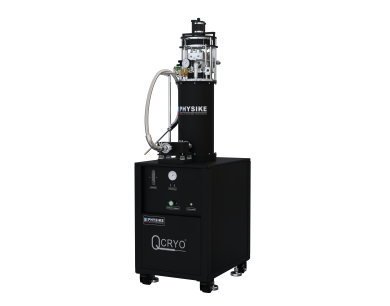
The top of the single shot He-3 refrigerator/insert is equipped with a He-3 storage tank, and the system internally integrates a He-3 pot, a cryogenic adsorption pump, and sealed pipelines. The He-3 in the He-3 storage tank flows into the He-3 pot after being condensed by a cold source. The cryogenic adsorption pump cools the He-3 pot down to 300 mK or even lower, and can maintain this minimum temperature for dozens of hours or longer. Based on the type of cold source, single shot He-3 refrigerators can be divided into two main categories: integrated single shot and split-type one-shot. Among them, the 4K cold head of the integrated single shot type is integrated into the He-3 refrigerator cryostat. In contrast, the cold source of the split-type single shot He-3 refrigerator comes from a helium circulation cryogenic system (Qcryo®). This system transmits cryogenic superfluid helium to the single shot He-3 refrigerator through flexible super-insulated pipelines, which is used to condense He-3 gas. This split-type design completely isolates the vibrations of the cold head and compressor from the He-3 refrigerator, solving the common problem of high vibration in current He-3 refrigerators. It is particularly suitable for experiments extremely sensitive to vibration, such as STM and AFM.

The continuous He-3 refrigerator is equipped with an external high-speed vacuum pump set and a gas circulation processing circuit. While pumping the He-3 pot to achieve ultra-low temperatures, it processes the He-3 extracted by the pump through a gas processing system before reintroducing it into the He-3 refrigerator. After multi-stage precooling, and condensation, the He-3 is injected back into the He-3 pot, enabling long-term continuous operation at the minimum temperature. The integrated continuous type has a 4K cold head integrated inside the cryostat, while the cold source of the split-type continuous type comes from a helium circulation cryogenic system (Qcryo®). This split-type design completely isolates the vibrations of the cold head and compressor from the He-3 refrigerator cryostat, solving the common problem of high vibration in He-3 refrigerators currently available on the market. It is particularly suitable for vibration-sensitive experiments. Additionally, a built-in superconducting magnet is available as an optional accessory.


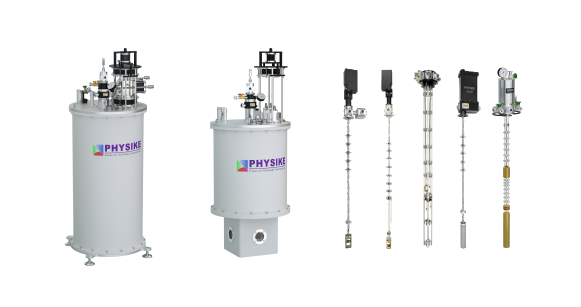
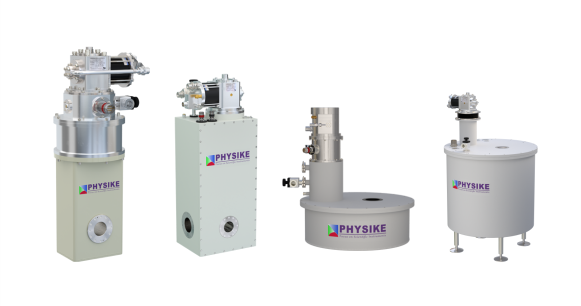
He-3   Refrigerator/Insert classification

Integrated Continuous He-3 Refrigerator   (Model: Cryocloud-100)

Split Continuous He-3 Refrigerator   (Model: Cryocloud-200)

Integrated Single-Shot He-3 Refrigerator   (Model: Cryocloud-300)

Split Single-Shot He-3 Refrigerator   (Model: Cryocloud-400)

He-3 Insert(Model: Cryocloud-500)


1、Integrated Continuous He-3 Refrigerator 

Model: Cryocloud-100

Adopting 4K PT or GM cryocooler as the cold source, through multi-stage heat exchange and counter-current technology and optimized flow resistance to efficiently pre-cooling and condensing He-3, external liquid nitrogen cold trap and sealed circulating pump set of gas handling system to ensure that the He-3 refrigerator is at the lowest temperature in a long period of continuous operation, specially designed high-performance thermal switch to greatly shorten the initial cooling time.

The outstanding advantage of the Integrated continuous He-3 refrigerator is that it has large cooling capacity and can run continuously for a long time, which is especially suitable for ARPES (Angle-Resolved Photoemission Spectroscopy) experiments requiring large cooling capacity, experiments requiring cooling of large mass samples, or ultra-low temperature experiments requiring uninterrupted operation for a long period of time.


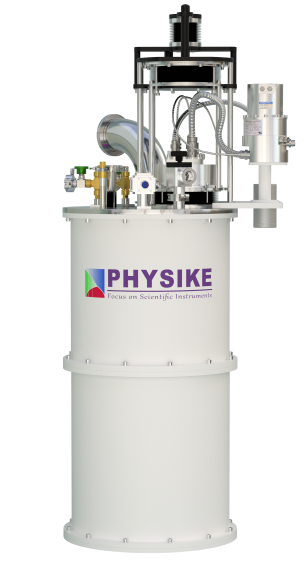
Integrated Continuous He-3 Refrigerator


Typical characteristics

Cold Source

Valve-Separated Pulse Tube Refrigerator

Nominal Temperature Range

<350mK

Operation Mode

Long-term continuous operation

Sample Environment

Vacuum (ultra-high vacuum optional)

Typical Applications

Quantum devices such as SQUID and TES, Quantum Hall Effect, X-ray experiments, neutron scattering experiments, De Haas-van Alphen measurement, ARPES, high pressure (DAC), etc.

Note: The minimum temperature is closely related to the pumping speed and ultimate vacuum of the vacuum pump


2. Split-Type Continuous He-3 Refrigerator 

Model: Cryocloud-200

The cold source of the split-type continuous He-3 refrigerator comes from the helium cycle cryogenic system (Qcryo®), which completely isolates the vibration of the cold head and compressor from the He-3 refrigerator cryostat. This solves the common problem of high vibration in current dry He-3 refrigerators, making it particularly suitable for vibration-sensitive experiments, such as those in the fields of Scanning Probe Microscopy (SPM), microscopic optics, quantum optics, and quantum precision measurement.

The split-type continuous He-3 refrigerator can be designed to be compatible with ultra-high vacuum according to requirements and can be baked up to 150 ℃. It is especially suitable for application scenarios that require low vibration, low temperature, and ultra-high vacuum (such as (STM), NanoARPES, etc.).


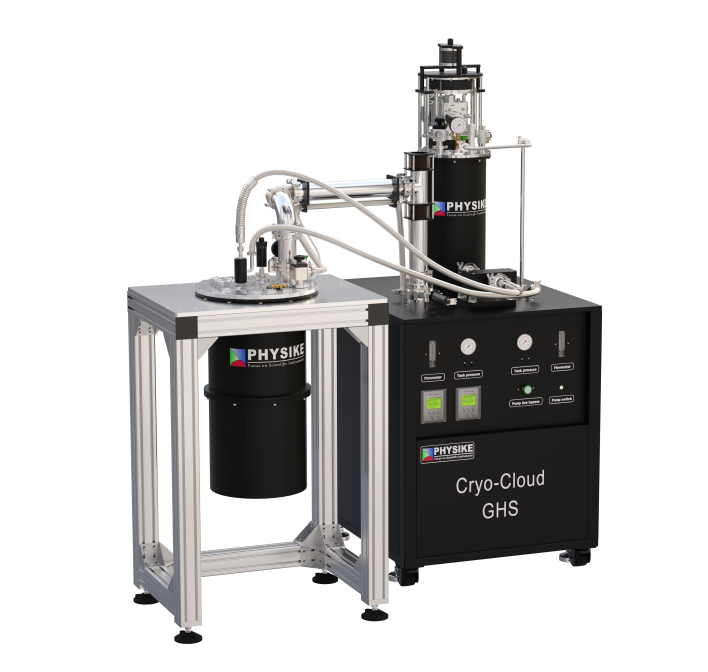
Split Continuous He-3 Refrigerator


Typical Characteristics of the split-type Continuous He-3 Refrigerator

Cold Source

Helium cycle cryogenic system (Qcryo®)

Nominal Temperature Range

<350mK

Operation Mode

Long-term continuous operation

Sample Environment

Vacuum (ultra-high vacuum optional)

Typical Applications

STM, SEM, AFM, Microscopic optics, Quantum optics, and Precision measurement, etc.

Note: The minimum temperature is closely related to the pumping speed and ultimate vacuum of the vacuum pump


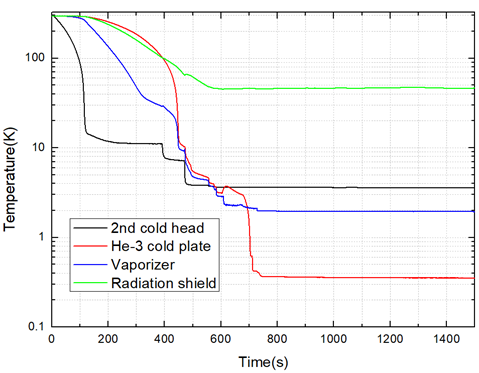
Typical Cooling Curve of Split-Type Continuous He-3 Refrigerator


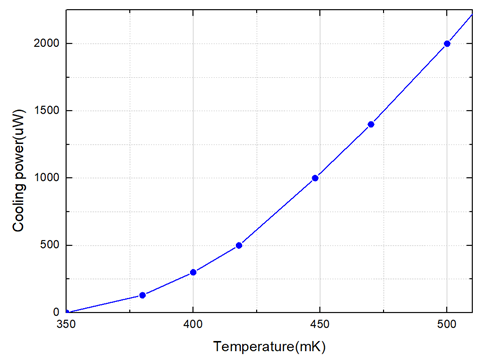
Cooling Capacity-Temperature Curve of a Typical Split-Type Continuous He-3 Refrigerator(Note: The cooling capacity is closely related to the pumping speed of the vacuum pump. For example, adding a high-pumping-speed Roots pump can increase the cooling capacity at 500 mK by several times or even dozens of times.)


3. Integrated One-shot He-3 Refrigerator 

Model: Cryocloud-300

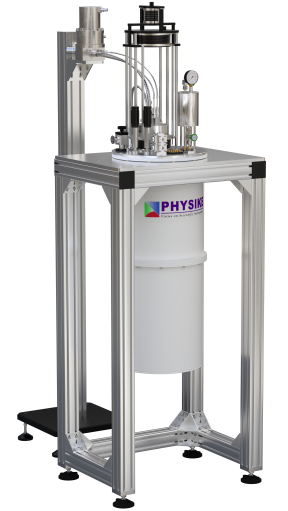
Integrated single shot He-3 Refrigerators typically use a valve-separated pulse tube refrigerator as the cold source. A He-3 storage tank is integrated at the top of the refrigerator, and a He-3 pot, cryogenic adsorption pump, and sealed pipelines are integrated inside. After the He-3 in the He-3 storage tank is condensed, it flows into the He-3 pot. The optimized condensation design combined with an efficient thermal switch design enables an initial cooling time of less than 10 hours. The built-in cryogenic adsorption pump can cool the He-3 pot to below 270 mK and maintain this temperature for more than 100 hours.

Compared with continuous He-3 refrigerators, single shot He-3 refrigerators do not require an external gas processing system, and feature simple operation, high cost-effectiveness, and low maintenance costs.


Integrated single shot He-3 Refrigerator


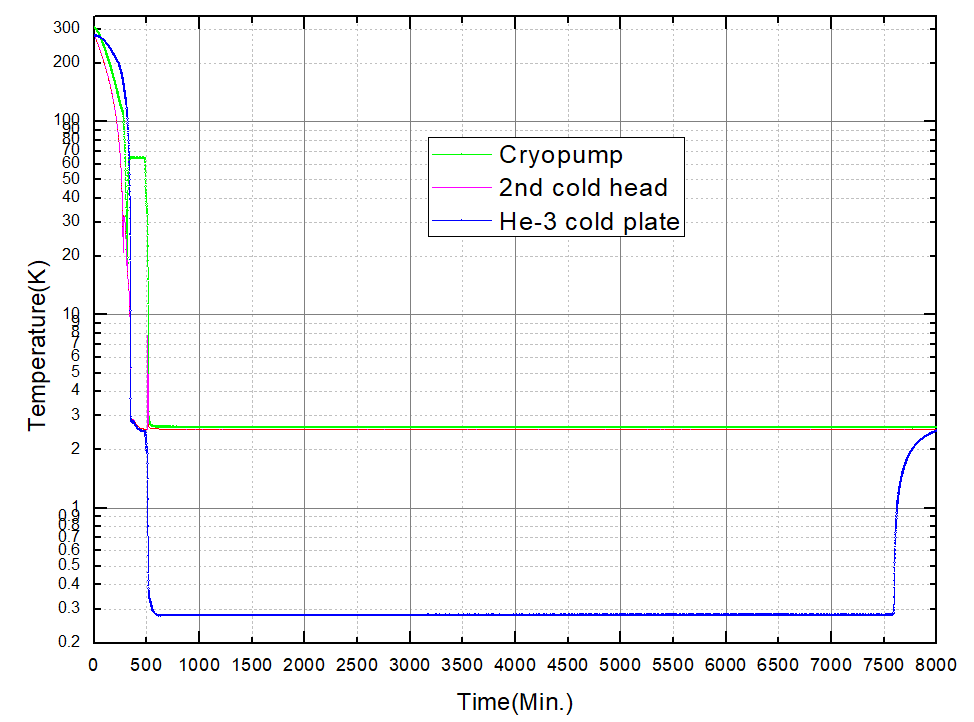
Cooling and Temperature-Control Holding Curves of the Cryocloud-300

(Note: The minimum temperature is a test result obtained under no-load condition and with a calibrated thermometer.)


Typical Characteristics of the Integrated One-shot He-3 Refrigerator

Cold Source

Valve-Separated Pulse Tube Refrigerator (G-M Refrigerator optional)

Nominal Temperature Range

<270mK(Note: No thermal load and no test cables)

Initial Cooling Time

<8 hours

300mK Cold Plate Diameter

 20cm

Hold Time at Minimum Temperature

>100 hours

Typical Applications

Superconducting device testing, SQUID, TES, quantum devices, high pressure (DAC), neutron scattering, 

high-energy physics, thermal transport testing, etc.


The integrated single shot He-3 refrigerator (Cryocloud-300) in the figure below adopts a valve-separated pulse tube refrigerator and a suspended vibration-damping cold head. It integrates 16 channels of RF semi-rigid cables and 72 channels of low-temperature twisted-pair wires. The diameter of the He-3 cold plate is 20 cm, with an initial cooling time of < 8 hours, a minimum temperature of < 280 mK, a holding time at the minimum temperature of > 100 hours, and a temperature stability of ±1 mK.


4. Split-Type One-shot He-3 Refrigerator

Model: Cryocloud-400

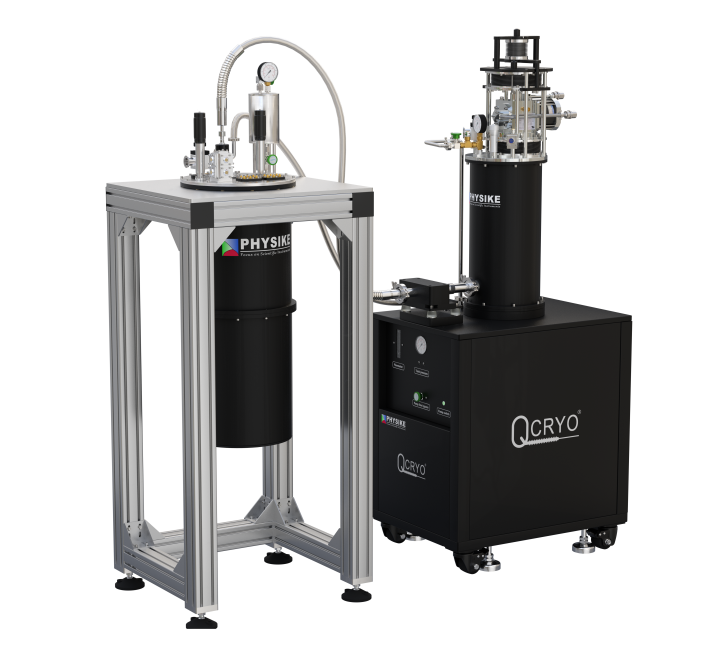
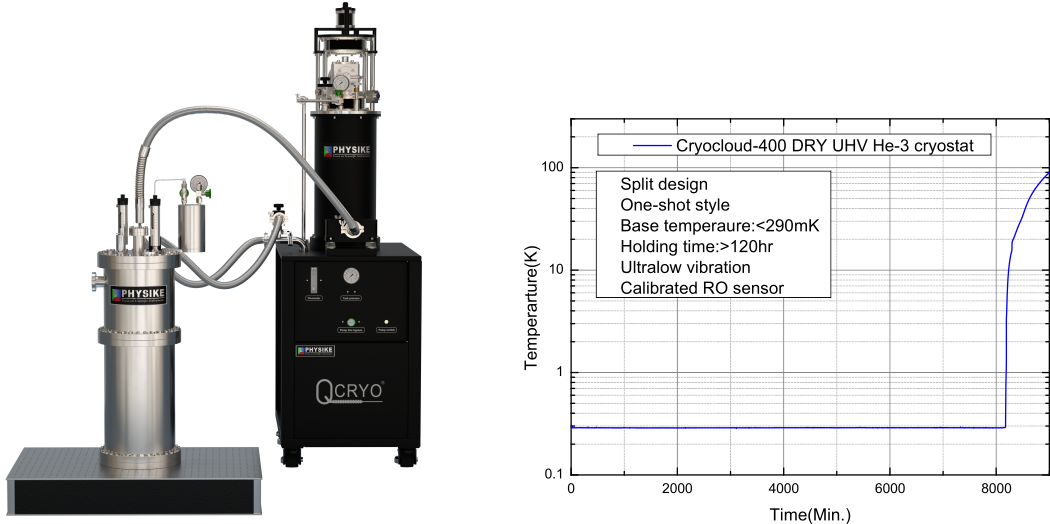
The cold source of the split-type single shot He-3 refrigerator comes from a helium cycle cryogenic system (Qcryo®). Similar to the integrated single shot He-3 refrigerator, a He-3 storage tank is integrated at the top of the split-type single shot He-3 refrigerator, and a He-3 pot, cryogenic adsorption pump, and sealed pipelines are integrated inside. After the He-3 in the He-3 storage tank is condensed, it flows into the He-3 pot. The built-in cryogenic adsorption pump can cool the He-3 pot to 270 mK and maintain this minimum temperature for several tens of hours or even longer.

Unlike the integrated one-shot He-3 refrigerator, the cold source of the split-type single shot He-3 refrigerator is derived from a helium cycle cryogenic system (Qcryo®). This design addresses the common issue of high vibration in current dry He-3 refrigerators, making it particularly suitable for vibration-sensitive experiments, such as those in the fields of STM, SEM, AFM, microscopic optics, single-photon detection, and quantum precision testing. It can be custom-designed to be compatible with ultra-high vacuum and can be baked up to 150℃, thus being especially well-suited for application scenarios that require low vibration, low temperature, and ultra-high vacuum.

In addition, compared with continuous He-3 refrigerators, the split-type single shot He-3 refrigerator does not require complex external He-3 circulation gas circuits and features simple operation, high cost-effectiveness, and low maintenance costs.

Split-Type single shot He-3 Refrigerator (Model: Cryocloud-400)


Typical   Characteristics

Cold Source

Helium cycle cryogenic system (Qcryo®)

Nominal Temperature Range

<270mK(Note: No thermal load and no test cables)

Operation Mode

Single shot

Sample Environment

Vacuum (Ultra-High Vacuum optional)

Typical Applications

Superconducting device testing, SQUID, TES, quantum devices, high pressure (DAC), neutron scattering, 

high-energy physics, thermal transport testing, etc.


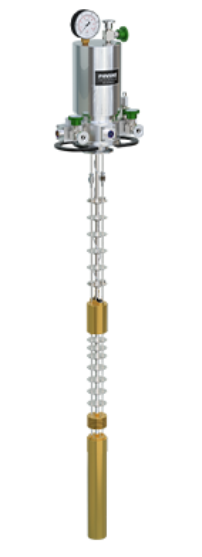
5. He-3 Insert 

Model: Cryocloud-500

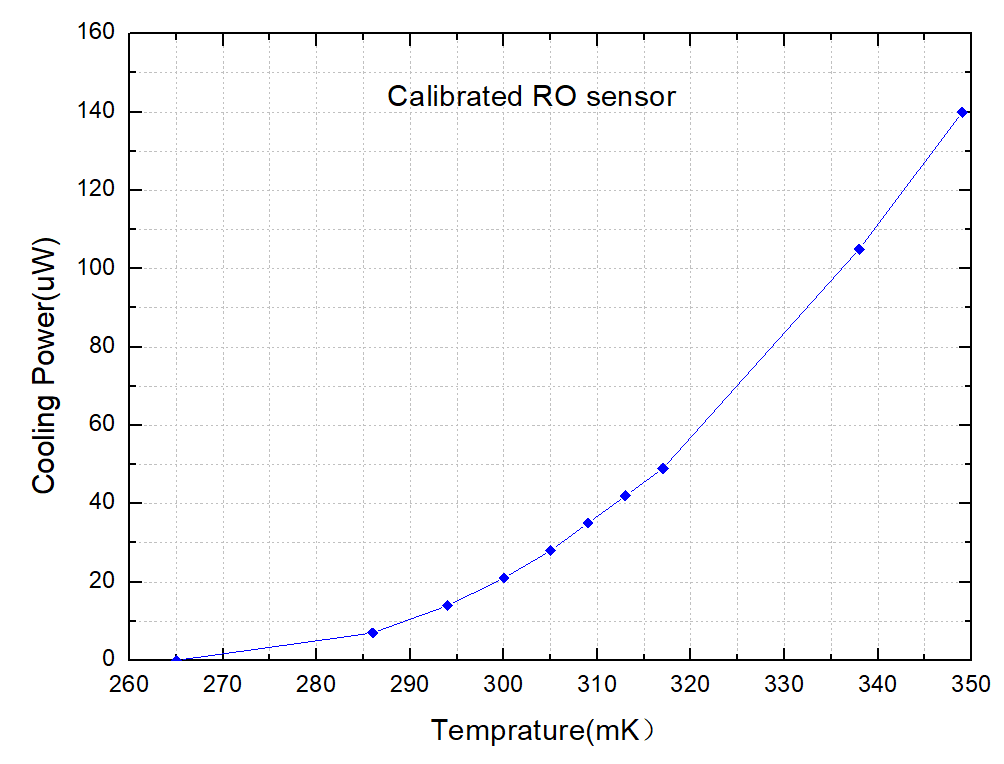
The He-3 insert is compatible with top-loading 1.5K refrigerators (Acryo-1.5K) and dry-type variable-temperature superconducting magnets (CryoM). Equipped with a built-in cryogenic adsorption pump and sealed gas circuits, the He-3 insert operates in a single shot mode. It achieves a minimum no-load temperature of < 270 mK, maintains this temperature for over 60 hours, and delivers a cooling capacity of > 100 μW at 350 mK. The standard sample environment of the He-3 insert is vacuum; options include a He-3 gas exchange version and an extended temperature-holding version. Typical applications include electromagnetic transport testing, quantum Hall effect, superconducting device testing, SQUID, high pressure (DAC) experiments, and thermal transport testing, etc.


Typical He-3 insert


Typical   Characteristics

Cold Source

Acryo-1.5K or CryoM

Nominal Temperature Range

<270mK (Note: No thermal load and no test cables)

Operation Mode

Single shot

Sample Environment

Vacuum (He-3 gas exchange optional)

Minimum Temperature Holding Time

>60 hours (Note: 2.5L NTP He-3)


Cooling Capacity-Temperature Curve of a He-3 Insert