Physike Technology Co., Ltd.

Dry Variable-Temperature Superconducting Magnet System

The dry variable-temperature superconducting magnet system (registered trademark: CryoM®) uses only one 4K pulse-tube cryocooler or GM cryocooler to cool both the superconducting magnet and the variable-temperature insert. It offers simple operation, low running cost, and strong expandability, making it an ideal cryogenic high-magnetic-field experimental platform for scientific users. The enhanced anti-clogging design requires no external liquid-nitrogen cold trap and supports continuous operation for more than six months.

The standard CryoM integrates a 9T solenoidal superconducting magnet with a 50mm sample tube ID and a static helium environment, with a variable temperature range of 1.5K–400K. It comes standard with a four-quadrant bipolar superconducting magnet power supply, a four-channel high-precision temperature controller, and an eight-channel temperature monitor. The patented cold head suspension anti-vibration and the self-pressurizing constant-pressure gas circulation loop deliver lower vibration, faster cool-down, and better temperature stability. The standard electrical test sample rod integrates a multi-pin vacuum feedthrough, a 16-pin puck sample holder, cryogenic twisted-pair test wiring, and a low-magnetic-resistance calibrated temperature sensor (calibration range: 1K–325K). Options include 12T / 14T / 16T solenoidal superconducting magnets, a 7T split-pair superconducting magnet with optical windows, a vector superconducting magnet (9T / 2T / 2T), and high-homogeneity NMR magnets, as well as a lower base temperature down to ≤1.3K and ultra-low-vibration options.
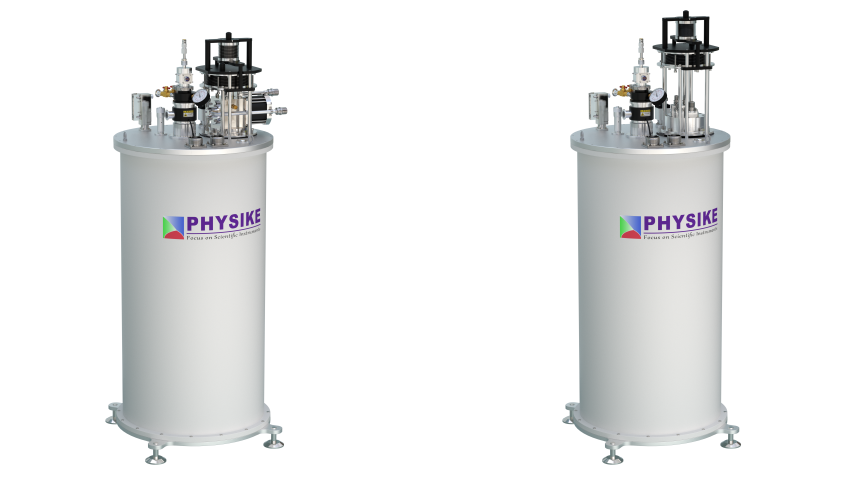
飞斯科CryoM超导磁体-1.png

GM cryocooler-based dry variable-temperature superconducting magnet system.(left) . 

Pulse-tube cryocooler-based dry variable-temperature superconducting magnet system.(right)

Typical specifications of CryoM-9

Cold head type

GM or pulse-tube

Sample tube ID50mm 

Initial cool-down time

≤18 hrs

Temperature stability

±10mK(1.5K-20K), ±15mK(20K-300K)

±20mK(300K-400K)

Magnetic field range

±9T 

Sweeping time≤20min

Temperature range

1.5K-400K

Sample environmentStatic helium

Re-cool-down time

<45min (VTI initially at low temperature )

<100min (VTI and sample rod initially at RT)


Options

  • 12T/14T/16T superconducting magnets

  • Split-pair superconducting magnet

  • Two-axis / three-axis vector magnets

  • High-homogeneity magnets

  • Energy-saving superconducting magnets

  • Single-axis sample rod

  • Two-axis sample rod

  • Microscopic optical insert

  • Susceptibility insert

  • Thermal testing insert

  • Ultra-low-vibration assembly

  • Multi-pin / SMA / BNC vacuum feedthroughs;

  • Twisted pair / flexible coaxial / semi-rigid cables; triaxial coaxial cables

  • He-3/DR inserts


Optical variable-temperature superconducting magnet system (Model: CryoM-7S-PT) uses a valve-separated pulse-tube cryocooler as the cold source. Patented cold head suspension anti-vibration, combined with rigid internal support and flexible thermal links inside the magnet, keeps the vibration level below 100nm. It integrates a split-pair superconducting magnet providing optical channels both parallel and perpendicular to the magnetic field, with a maximum field of 7T at the sample center. The variable-temperature insert with a static helium environment provides a sample tube ID of ≥31mm and a temperature range of 1.5K–300K. Various UV, visible, infrared, and terahertz optical windows are available for optical experiments such as Raman spectroscopy, FTIR spectroscopy, and photoluminescence. The compact magnet tail makes it an ideal cryogenic high-magnetic-field optical platform. Typical applications include magneto-optical Kerr effect (MOKE) measurements, simultaneous optical-excitation and electrical-transport detection under cryogenic high magnetic fields, micro-area scanning through the optical windows for direct observation of the evolution of topological magnetic domains such as magnetic skyrmions, and using the high-transmission terahertz window to study the modulation of low-energy excitations (e.g., cyclotron resonance and plasmons) in materials by strong magnetic fields.


Typical specifications of CryoM-7S-PT

Cold head type

Pulse-tube

Sample tube ID≥31mm
Nominal vibration level<100nmInitial cool-down time≤20 hrs
Temperature stability±10mK(1.5K-20K), ±15mK(20K-300K)Magnetic field range±7T (horizontal direction)
Magnetic field homogeneity±0.3%@10mm DSVTemperature range1.5K-300K

Sweeping time 

≤40min

Magnet tail dimensions30.3cm×28.5cm
Sample environmentStatic helium


光学型变温超导磁体系统.png

CryoM-7S-PT

Dry high-homogeneity variable-temperature superconducting magnet system (Model: CryoM-9-NMR) integrates a high-homogeneity superconducting magnet with a field homogeneity at the magnet center better than ±10ppm@10mm DSV and a field drift in persistent mode better than 0.5ppm/hr, providing a variable-temperature environment of 1.5K–300K. It is an ideal cryogenic high-magnetic-field platform for solid-state NMR, electron paramagnetic resonance (EPR), spin qubits, NV centers, and cutting-edge quantum physics and materials property characterization. 


Typical specifications of the 9T high-homogeneity variable-temperature superconducting magnet system
Cold head typePulse-tubeSample tube ID50mm
Temperature stability±10mK(1.5K-20K), ±15mK(20K-300K)Magnetic field range±9T (horizontal direction)
Magnetic field homogeneity at centerBetter than ±10ppm@10mm DSVTemperature range1.5K-300K
Field drift in persistent mode≤0.5ppm/hrSample environmentStatic helium
Typical applications: NMR, EPR, spin qubits, NV centers, cutting-edge quantum physics and materials property characterization, quantum transport measurements, zero-field and high-field phase transitions of materials, etc.

典型干式高均匀变温超导磁体系统.png

Typical dry high-homogeneity variable-temperature superconducting magnet system.

Three-axis vector variable-temperature superconducting magnet system (Model: CryoM-9/2/2) uses a GM cryocooler or a valve-separated pulse-tube cryocooler as the cold source and integrates a 9T / 2T / 2T three-axis vector superconducting magnet with a combined field of 2T. It integrates an efficient variable-temperature insert with a static helium environment, a sample tube ID of ≥50mm, and a temperature range of 1.5K–300K.

The three-axis vector variable-temperature superconducting magnet system independently controls the magnetic-field direction and magnitude in three-dimensional space as well as the cryogenic environment. Without any physical rotation of the sample, the field can be rotated seamlessly in all directions in 3D space simply by adjusting the currents. It is widely applicable to frontier research fields such as condensed-matter physics, quantum computing, materials science, and spintronics - e.g., probing the anisotropy of novel states such as topological insulators, Dirac semimetals, and Majorana fermions by rotating the field over multiple angles; precisely controlling the alignment and flipping of electron spins in nanodevices for the development of next-generation high-speed, low-power non-volatile magnetic random-access memories; and studying the in-plane and out-of-plane quantum Hall effects and magnetic properties of graphene, transition-metal dichalcogenides, and related materials.  


Typical specifications of CryoM-9-2-2-PT 
Cold head typePulse-tube or GMSample tube ID≥50mm
Initial cool-down time≤35 hrs (pulse-tube)

≤42 hrs (GM)

Temperature range1.5K-300K
Temperature stability±10mK (1.5K-20K), ±15mK (20K-300K)Magnetic field range

±9T (vertical Z direction)

±2T (horizontal X direction)

±2T (horizontal Y direction)

Sample environmentStatic helium

三轴矢量变温超导磁体系统.png

Pulse-tube cryocooler-based 9/2/2 three-axis vector variable-temperature superconducting magnet system

CryoM offers a wide range of options, including single-axis / two-axis sample rods, optical sample rods, He-3 inserts / dilution-refrigerator inserts, susceptibility inserts / thermal testing inserts, lower base temperature (≤1.3K), ultra-low-vibration assemblies (e.g., cold head suspension anti-vibration, anti-vibration sandboxes), and terminal boxes. With a valve-separated pulse-tube cryocooler and cold head suspension anti-vibration, the ultra-low-vibration dry variable-temperature superconducting magnet achieves a vibration level below 100nm and is particularly suitable for low-temperature magneto-optical experiments.

CryoM-EE is an economical 1.5K 9T variable-temperature superconducting magnet with extremely high cost-effectiveness. It features a static helium, ≥30mm sample tube ID, and a nominal variable temperature range of 1.5K-300K.

CryoM-EE adopts a GM cryocooler as the cold source, with a static power consumption of only 3.5KW, which greatly saves electrical energy. The magnet cryostat features a compact design, with an OD of 43.7cm and a height of 80cm, significantly saving laboratory space.

CryoM-EE delivers excellent performance: the sweep time for 0T to 9T is within 15 minutes, and linear ramping from 1.5K to RT is within 35 minutes.

CryoM-EE has the characteristics of simple operation, low maintenance cost. Its enhanced anti-clogging design does not require an external liquid nitrogen cold trap, enabling continuous operation for more than half a year.


Typical specifications of CryoM-EE

Cold head type

GM 

Magnetic field range±9T
Sample tube ID≥30mmSample environmentStatic Helium
Initial cooling time≤24 hrsSweep time for 0T to 9T≤15min
Temperature range1.5K-300KTemperature stability±25mK
Linear ramping from1.5K to RT≤35minPower consumption3.5KW (Stable)
Compressor cooling method

Water cooling (Option: air cooling) 

经济型1.5K 9T变温超导磁体(型号:CryoM-EE).png

In addition, based on the CryoM dry variable-temperature superconducting magnet system, the cryogenic high-magnetic-field property measurement system (TKMS) integrates electromagnetic transport, Hall-effect, susceptibility, and thermal-transport measurement capabilities under cryogenic high magnetic fields, and provides multi-channel sample measurement modules that allow simultaneous testing of multiple samples.

典型低温强磁场物性测试系统(TKMS).png

Typical cryogenic high-magnetic-field physical property measurement system (TKMS)

The He-3 insert matches the top-loading 1.5K cryocooler (Acryo-1.5K) and the dry variable-temperature superconducting magnet (CryoM). It has a built-in cryogenic sorption pump and a sealed He-3 gas loop operating in single-shot mode. Under no-heat-load conditions, a base temperature of ≤ 270 mK is achieved and maintained for > 80h, and a cooling power of ≥ 100µW is delivered at 350mK. The standard He-3 insert operates in vacuum; an exchange-gas version and longer holding times are available as options. Typical applications include electromagnetic transport measurements, the quantum Hall effect, superconducting device testing, SQUID testing, high-pressure (DAC) experiments, and thermal-transport measurements.


Typical specifications of the He-3 insert
Cold sourceAcryo-1.5K or CryoM cryogenic systemBase temperature≤270mK (note: no external heat load)
Base temperature stability±1mKOperating modeSingle shot
Sample environmentVacuum (option: exchange gas)Base temperature holding time≥80 hrs
Note:Using 2.5L NTP He-3


飞斯科CryoM超导磁体-4.png

Pulse-tube cryocooler-based dry variable-temperature superconducting magnet system integrated with a He-3 insert(left);Typical He-3 insert(right);

典型He-3插件制冷量与温度关系.png

Cooling power versus temperature of a typical He-3 insert

Example

A He-3 insert integrating 48 low-resistance lines and four RF coaxial cables, charged with 3.5L NTP He-3 gas, reaches a base temperature below 270mK, holds the base temperature for more than 200h, and offers a temperature stability better than 1mK.

氦三插件示例1.png

氦三插件示例2.png

AC susceptibility module


Typical specifications of the AC susceptibility module

AC susceptibility[χ]

Sensitivity

<1x10⁻⁸   emu@10 kHz

Phase accuracy

±0.5°

Drive parameters

Amplitude

0.01 to 16 Oe ( peak )

Frequency range

10 Hz to 10 kHz

Coil winding  dimensions

Inner diameter

8 mm

Operating range

Temperature: 1.5K to 325 K; Magnetic field: 0 to 16T(sensitivity conditions@ AC excitation 10mOe @ 10 kHz)

Note

Parameters measured at zero field


Insert examples
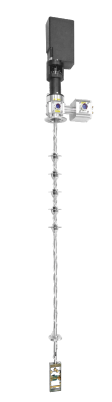
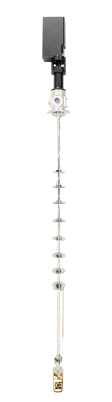
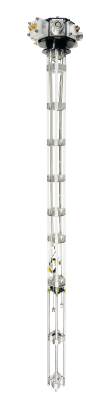
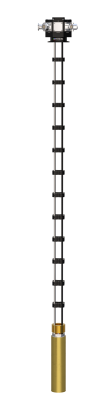
Optional Inserts-1.pngOptional Inserts-2.pngOptional Inserts-3.pngOptional Inserts-4.png

Motorized single-axis rotator rod

 Two-axis rotator sample rodOptical sample rodVacuum sample rod


Examples:

1、The system uses a GM cryocooler as the cold source with the patented cold head suspension and anti-vibration technique, and a top-loading design. It provides a static exchange-helium environment, a 50mm sample tube ID, a temperature range of<1.5K-300K, and a magnetic field range of ±9T, with integrated property-measurement modules allowing simultaneous testing of multiple samples.


飞斯科CryoM超导磁体案例一.png


2、The system uses a valve-separated low-vibration pulse-tube cryocooler as the cold source and the patented cold head suspension and anti-vibration technique; the nominal vibration level is below 100nm. The top-loading system provides a static exchange-helium environment, a 50 mm sample tube ID, a base temperature below 1.35K, a maximum field of 9T, and a vacuum sample rod for thermal experiments.


飞斯科CryoM超导磁体案例二.png


3、The system uses a valve-separated pulse-tube cryocooler as the cold source and the patented cold head suspension and anti-vibration technique with a top-loading design; the vibration level is 100nm. It provides a static exchange-helium environment, a 50 mm sample tube ID, a base temperature below 1.5K, an initial cool-down time below 30h, a maximum field of 12T, and a sweep time below 60min.


超导磁体案例三.png


4、The high-field cryogenic system provides a 50.5mm sample tube ID, a temperature range of 1.5K–400K, and a magnetic field range of ±9T, with integrated property-measurement modules allowing simultaneous testing of multiple samples.


飞斯科CryoM超导磁体案例四.png


5、The system uses a valve-separated low-vibration pulse-tube cryocooler as the cold source with the patented cold head suspension and anti-vibration technique; the base temperature is below 1.5K and the maximum field is 9T. The system serves not only for electromagnetic transport measurements but also for magneto-optical measurements such as MOKE.


飞斯科CryoM超导磁体案例五.png